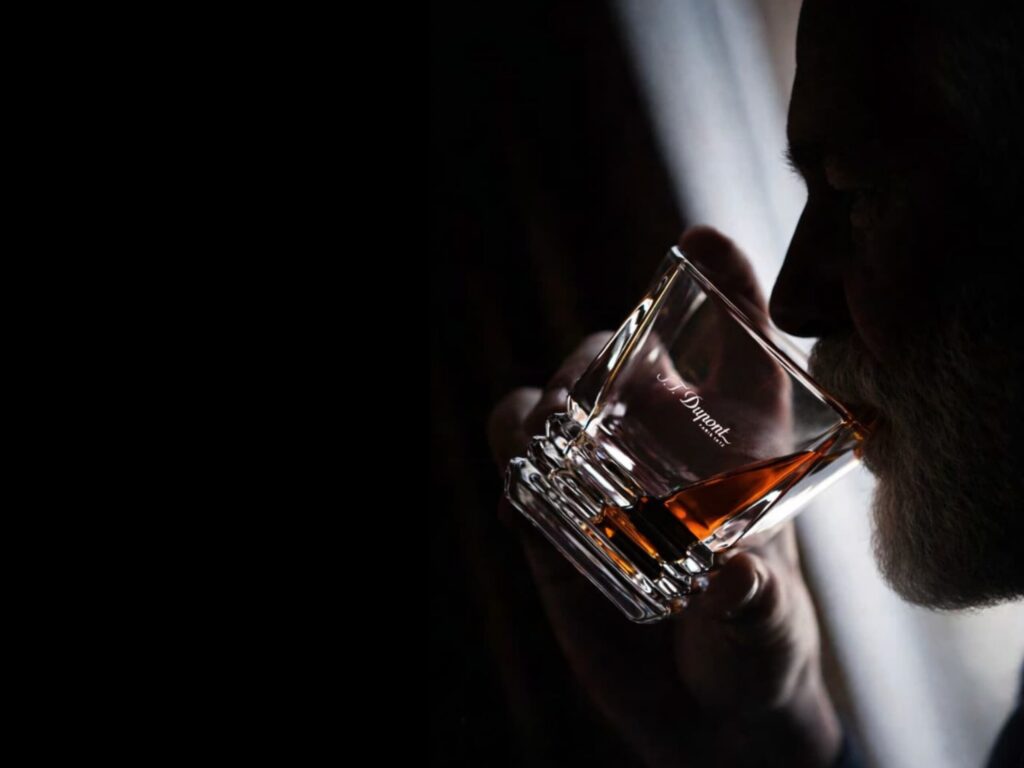
The experience never lives in the liquid alone. It lives in everything that surrounds it: the glass in the hand, the case that carried the bottle home, the tray set down at the center of the table.
For whisky brands, these objects are an opportunity often left to chance. The question is no longer what to hand a visitor, a collector, or a partner. It is what they will bring out again when the next bottle is opened.
From Visitor to Storyteller
For many whisky lovers, the relationship with a house begins at the distillery. According to the Scotch Whisky Association, Scotch whisky visitor center welcomed 2.7 million visits in 2024. As reported by The Scotsman, more than 60% of those visitors came from abroad.
The visit follows a familiar arc. The visitor discovers the house, its people, and the way its whisky is made. They choose a bottle to take home. Weeks later, it is uncorked among friends, and the visit is retold: the copper stills, the scent of the warehouse, the dram poured straight from the cask.
In that moment, the visitor becomes a compelling storyteller for the brand. And with so many traveling from abroad, the story often crosses borders, introducing the house to people who may never have visited.
Yet the bottle is eventually finished. A considered object gives that memory a lasting physical presence.
A pair of glasses engraved with a detail from the distillery.
A tasting notebook to record each dram and the people it was shared with.
Coasters cut from cask wood, its origin documented.
A bottle case built to travel home and return to the table.
How the object reaches the visitor matters as much as the object itself. A piece sold in the visitor shop extends revenue and lets guests choose their own memento. A piece included with a tour or a bottle purchase works differently: it is received, not bought, and it signals that the house values the visit itself. Each serves a distinct purpose and should be designed around that objective.
The distillery shop is not the end of the visit. It is the beginning of the brand’s presence in everyday life.
Objects That Belong to the Ritual
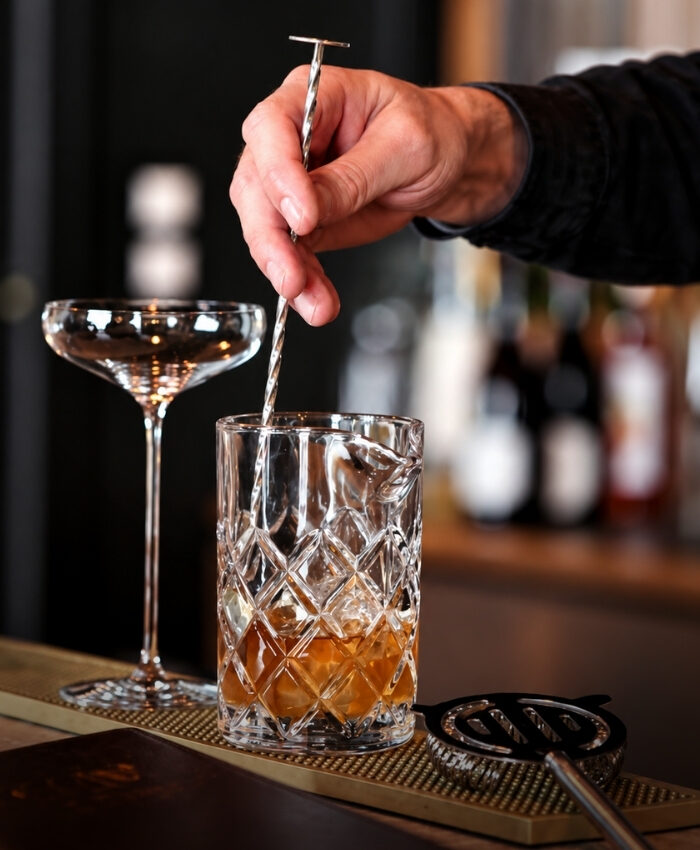
An object earns its place at the table by doing its work well. A logo can be applied to anything. Relevance cannot.
The tasting. A glass is chosen for its shape, its balance, the way it gathers the aroma and rests in the hand. Branding is placed where it is discovered in use, not where it competes with the whisky.
The gathering. Glasses, coasters, and serving pieces are designed as a set, to be brought out together and shared easily. The details that reward a closer look are the ones guests remember.
The journey. A case is built around the bottle itself: its dimensions, its weight, the protection it needs. Sturdy enough for the trip home, refined enough to be opened in front of friends.
Repeated use begins with an object that performs its purpose.
Drawing From the House Itself
The most distinctive whisky gifts begin with details specific to the house.
A signature architectural detail from the distillery becomes an engraved pattern.
A signature stopper is echoed in the closure of a case.
Archive labels inform typography and packaging.
Cask wood with a documented history finds a second life in a serving tray.
A house’s own way of serving its whisky shapes the design of a set.
Material, proportion, finish, and packaging then speak with one voice. The result is an object that feels unmistakably connected to the house.
Gifting Across the Whisky Journey
The distillery is only one stage. Whisky houses give wherever a relationship is built, and each recipient calls for a different object.
Collectors and private clients.
A limited release deserves an object of equal standing: a bespoke case, a numbered accessory, a gift designed around one specific bottle or milestone. The presentation reflects the character of the release and the significance of the occasion.
Bartenders and hospitality partners.
The people who pour the brand every night are its quietest advocates. Their tools, whether a jigger, a bar spoon, or a leather apron, must be made for service: well balanced, durable, and developed with input from those who use them. Shift after shift, the brand stays in their hands.
Corporate partners and special events.
A tasting dinner, a cask selection, a house anniversary. An engraving, a material, or a detail tied to the occasion turns the closing gift into a record of the evening.
Gift With Purchase.
At year-end or for a selected release, a bottle paired with a well-made accessory becomes a present ready to be offered. The accessory must hold its value after the purchase and reflect the character of the whisky it accompanies.
In every case, the recipient and the occasion shape the design, not the other way around.
Objects for the Whisky Ritual
At the Tasting Table: glassware, coasters, trays, and serving pieces.
From Distillery to Destination: bottle cases, carriers, tasting notebooks, and travel pieces.
For Collectors and Special Occasions: presentation boxes, bespoke cases, and commemorative objects.
Crafting Whisky Gifts With Ateliers AME
Whisky houses ask of their objects what they ask of their liquid: authenticity, patience, and a true sense of place. Ateliers AME brings that standard to every project.
- Discover: understand the house, the recipient, and the occasion, along with the distribution channel, quantities, and budget.
- Design: develop concepts around the bottle and the way the object will be used, supported by renderings, material samples, and prototypes.
- Craft: select the right materials and specialist artisans, then validate construction, finish, and function before production.
- Deliver: coordinate production, quality control, packaging, and delivery for the launch, the event, or the gifting program.
Whether for a distillery experience, a limited release, a trade program, or a celebration, Ateliers AME creates objects that belong to the house they represent.
Conclusion
A whisky gift earns its place through its relevance, its quality, and its connection to the house. When it does, the brand remains present at the occasions that matter most.
The case is opened at the next gathering.
The glasses return to the table.
And the story of the distillery is told once more.